

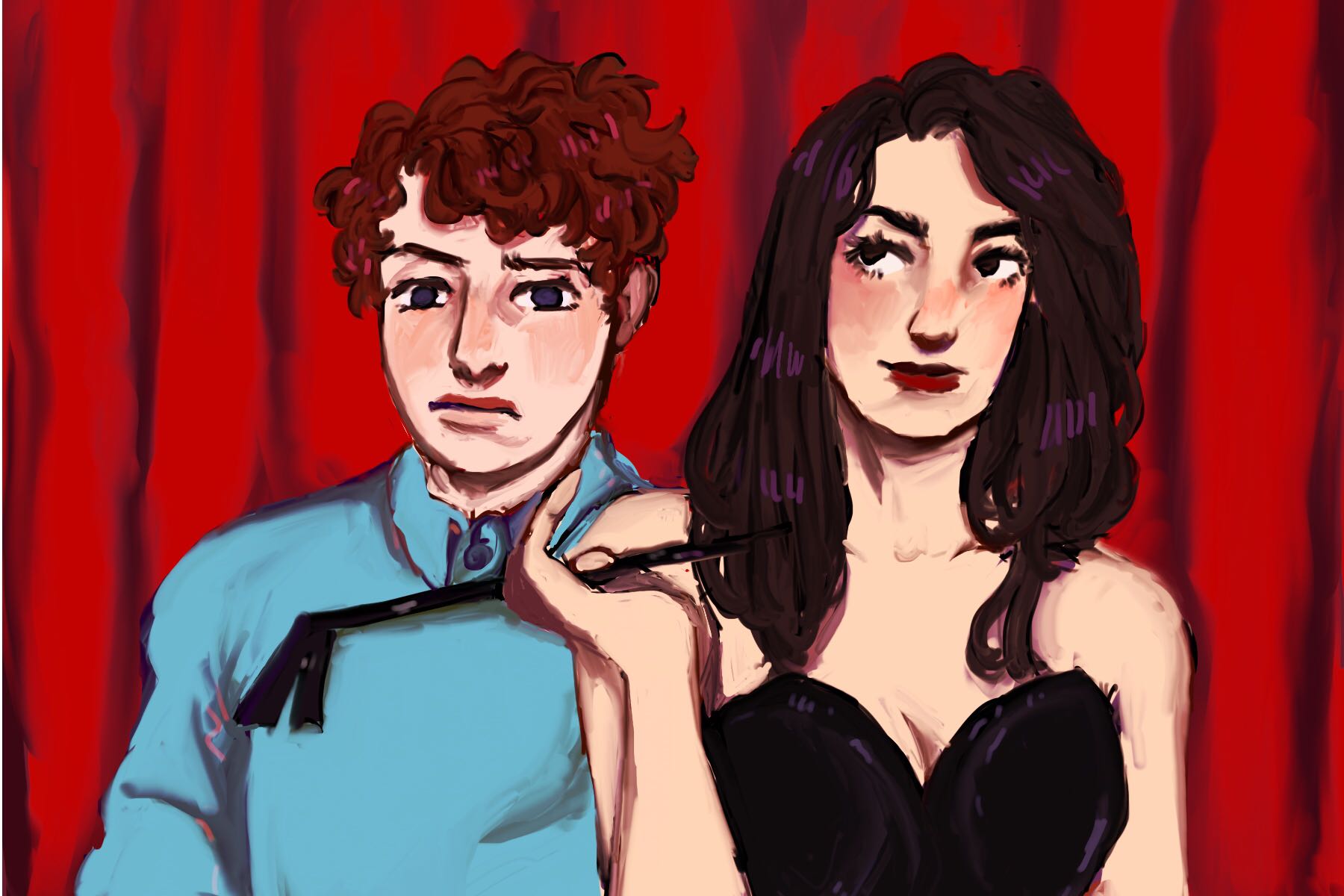

At first glance, “Bonding” appears to be a short and sweet, yet dark comedy surrounding itself with the world of the dominatrix business. With seven episodes running roughly 17 minutes each, the story is fast paced and character driven. You could easily sit down and watch the entire show in one afternoon. It is based on creator Righter Doyle’s personal experiences as a bodyguard to his dominatrix friend, so you would assume the television series has grounding in real-life experiences.
However, the reviews have been mixed. Some audience members are praising the show’s ability in showcasing a line of work that is not usually depicted in mainstream media; sex work of any kind is, after all, highly stigmatized. On the other hand, those in the dominatrix community are calling the show inaccurate in its depiction at best and horridly problematic at worst.
“Bonding” tells the story and life of Tiff (Zoe Levin), a psychology grad student living in New York City, who also happens to be a successful dominatrix (supposedly a highly sought-after dominatrix). She recruits her best friend Pete, played by Brendan Scannell, to become her assistant and bodyguard.
Ideally, Pete’s character is supposed to directly relate to the audience in that he is being introduced to the world of domineering at the same time as most viewers. It seems that “Bonding” hopes to show the dominatrix business in a positive and kind light (even within the darker moments of humor).
So why is the BDSM/dominatrix community so distressed by the show? It begins with the minor details. As talked about in an article in Rolling Stone, based on Twitter posts within the dominatrix community, there are apparently an infinite number of tiny infractions. Mistress Couple, the head mistress of La Domaine Esemar, told Rolling Stone, “She’s supposed to be one of NYC’s best dominatrixes but she’s working in a dungeon space with carpeting on the floor, which is not cleanly … You’d be hard-pressed to find any dungeon with a shag carpet.” So clearly, “Bonding” is not the most accurate of shows.
Also, one Twitter user commented on the wardrobe of the show. “Watching #bondingnetflix and want to know who the f— was their BDSM consult on this??? The Domme’s corset doesn’t fit and she is wearing a f—— dog collar into session. Vanilla people should not be allowed to write/portray kink.”
Watching #bondingnetflix and want to know who the fuck was their BDSM consult on this??? The Domme’s corset doesn’t fit and she is wearing a fucking dog collar into session. Vanilla people should not be allowed to write/portray kink.
— Megan McCord (@Megan_McCord) April 25, 2019
Larger and more worrisome to the community, though, is the lack of conversation and portrayal of the importance of safety within the dominatrix business. The lack of concern within the show becomes blatant after you read reviews and articles surrounding “Bonding.”
One Twitter user put it plainly: “The main thing that bothered me was not only the missed opportunity to bring in the theme of consent in a clever way, but in #BondingNetflix consent is horrifically absent. Consent is something the BDSM community, and especially the PRO BDSM community learned very well.”
There’s a moment in the show that comes immediately to mind. At one point, Tiff lies and tricks Pete into participating in “piss play.” He is given no warning as to what he is walking into, and this happens on multiple occasions, with multiple clients.
Furthermore, negotiations concerning safety are all but left out of the series, so yes, I understand where this series becomes all too painful to watch for anyone who is a sex worker or wishes to destigmatize that particular world and business.
The main thing that bothered me was not only the missed opportunity to bring in the theme of consent in a clever way, but in #BondingNetflix consent is horrifically absent. Consent is something the BDSM community, and especially the PRO BDSM community learned very well.
— Domina M (@DominaM) April 25, 2019
Even more painful is Netflix’s choice to have the “Bonding” Twitter account run by the fictional “Mistress May,” Tiff’s identity as a dominatrix within the show. The account seems like an insensitive insult to the community. Most of the time, real domme accounts are shut down or banned, not verified like the account Netflix has set up.
Sabina Magic said it best: “This is in such bad taste. Operating this account like an actual domme account when real dommes are shut down and shadowbanned all the time. Yuck. Throw the whole concept away. Ew.”
This is in such bad taste. Operating this account like an actual domme account when real dommes are shut down and shadowbanned all the time. Yuck. Throw the whole concept away. Ew.
— Sabina Magic ⚡️New York City | Worldwide (@sab_magic) April 24, 2019
Others have a problem with the stereotypes conveyed in Tiff’s character. First, she is another college student forced into sex work. Second, sexual trauma was the reason she entered into sex work. These dangerous generalizations imply that those in sex work were forced to be there or entered into the world because they were traumatized or have a negative relationship with sex.
Yet, the show was made.
In the words of the show’s creator, “As a young gay man still struggling with my own sexuality, guarding the door while one of my best friends from home tied a naked man to a four poster bed and whipped him was jarring to say the least, but to my surprise it eventually freed me of some of my own sexual hang ups.”
This reasoning for the show’s basis and creation seems legitimate and sets up a possibly wonderful storyline, yet it would appear the show did not do enough consulting. Maybe it’s because the story is so short that it was unable to completely touch on the real-life problems faced by sex workers, social, economic, physical, mental, legal, emotional or otherwise.
And somehow the show, despite all of this, has a pretty positive review on Rotten Tomatoes and IMDb. So, should we watch it? Or should we not? If you have a moment, take the time to give the show a chance and see what you think.










One of the movies worth pondering on its humanistic value. geometry dash deadlocked
The content is open and it depends on each person’s perspective and assessment fish eat fish
Word vs Word is an exciting single-player with bot word puzzle game where you battle in real-time matches.
I first watched “Bonding” out of curiosity, finding it fun, different, and humorous. But after reading the reviews from people involved, I realized that many of the details that I thought were “entertaining” were very offensive and misleading. I now understand that misrepresenting a minority community in the media can do more harm than good.
That’s Not My Neighbor
Wow, dominatrix bodyguard! Who knew such a job existed? The show sounds binge-worthy, even with its potentially problematic portrayal. Real-life inspiration doesn’t always guarantee accuracy, right? I bet it’s a wild ride, regardless. I once tried coding a simple game, it was a total Slither io mess but I learned a lot about simplifying complex ideas, just like this show should have done better.
Such a complex profession deserves nuance. Makes me wonder if audiences understand the reality. I remember once trying to explain the complexities of ethical non-monogamy to my very traditional aunt; it felt like climbing a never-ending Geometry Dash of misconceptions. Sharing this felt like quite an undertaking.
Makes me wonder if audiences understand the reality. I remember once trying to explain the complexities of ethical non-monogamy to my very traditional aunt; it felt like climbing a never-ending Geometry Dash of misconceptions. Sharing this felt like quite an undertaking.
According to Aurealisa, series like Bonding tend to fall into the trap of glamorizing sex work, particularly BDSM. They focus on the fun and empowerment aspects without truly exploring the complexities, safety risks, social stigma, and financial pressures faced by the majority of sex workers. This isn’t normalization, but fantasizing.
Free star symbols
Free star symbols collection! Copy and paste Unicode star symbols instantly. Star text generator and aesthetic text tools for social media. ★☆
Browse complete star symbols collection. Classic stars, decorative stars, and Unicode characters. One-click copy to clipboard.
Spend bill gates money
Ever wondered what you’d do with Bill Gates’ money? Now you can find out. We’ll give you his $130 billion fortune to spend on anything you desire. Buy a fleet of supercars, a private island, or donate it all to a good cause. Your billionaire journey starts here!
Throw a potato
Forget logic. Forget reason. Embrace the madness! In this game, the only way forward is to throw a potato… and then another… and another. Experience an endless, chaotic loop of pure, spud-flinging insanity. You have been warned.
No i’m not a human
Master the Ultimate No I’m not a Human Strategy Guide
We provide the most comprehensive No I’m not a Human guides, detailed system requirement analysis, secure download channels, and professional gaming tutorials. Whether you’re a newcomer or a veteran player seeking to collect all endings, you’ll find everything you need here.
Vein game
VEIN game is a post-apocalyptic survival multiplayer sandbox game. Gather supplies, explore abandoned buildings, combat bandits, defend your home, and rebuild society—whether alone or with friends. As seasons change, VEIN game world evolves with persistent, long-scale random events.Comprehensive VEIN game resources including guides, wiki, items database, and interactive maps to help you survive and thrive.
Fish it
Fish It!, built by the Fish Atelier team, is one of Roblox’s most-loved fishing simulators. Hunt rare fish, sail across island chains, upgrade rods and bobbers, and help curate the official wiki. Stack Luck, Mutation, and Shiny chances to become the legendary angler every island talks about. Use our calculators to optimize your strategy and explore the wiki for detailed equipment stats.Curated walkthroughs from the Roblox community: progression routes, Luck builds, and boat investments. These guides help you understand game mechanics, optimize your gear setup, and plan your fishing strategy. Got more tips? Drop them on the wiki.
It sounds like “Bonding” has sparked a lively debate about its portrayal of the dominatrix world! It’s interesting to consider how shows like this contribute to discussions around stigmatized professions. While some hail it for shedding light on these realities, others find it lacking in authenticity. Speaking of unique experiences, have you checked out Snow Rider 3D? It’s a fun game that offers a different kind of adventure! You can find it here: Snow Rider 3D.
The show Bonding has seven episodes, each about 17 minutes, which is pretty quick. I was thinking, how could they use an AI video generator to improve the accuracy of the dominatrix world? It’s like when you’re on the subway, you wonder how much of this is real and how much is just for show, you know?
Play drift boss now to prove your quick reflexes and excellent adaptability.
This made the whole topic so much clearer for me. Thanks a lot!
Great article, really learned a lot from this! I also recommend checking out Bizarre Lineage for more quality content on Bizarre Lineage.
This article raises important questions about how media portrays marginalized communities. Shows like “Bonding” walk a fine line between entertainment and representation. It reminds me of how veo3.1 video generation is changing how creators approach storytelling—accuracy and authenticity matter, whether in TV or video content.
This article really highlights the tension between entertainment and authentic representation. Shows like “Bonding” have the power to shape public perception, yet accuracy matters when depicting marginalized communities. For creators looking to tell more authentic stories through video, Music to Video offers AI-powered tools to transform audio into cinematic visuals with precise creative control.
This article really highlights the tension between entertainment and authentic representation slide down free.
uBlock Origin is one of the most powerful and lightweight ad blockers available today. It helps users browse faster by blocking unwanted ads, trackers, and malicious scripts. With customizable filters and strong privacy features, uBlock Origin ensures a clean, secure, and distraction-free internet experience for everyone.
This is a very interesting and thought-provoking analysis of Bonding. I appreciate how it highlights both audience reception and criticism from the BDSM community. It’s important to have discussions about representation and accuracy in media portrayals of sensitive topics.
Great breakdown of the show’s concept and its reception! I like how the article balances entertainment value with real-world concerns about representation. It really encourages viewers to think more critically about how sex work is depicted in mainstream media.
This is a very balanced and insightful discussion about Bonding. I like how it explores both the creative storytelling aspect and the concerns from the BDSM community. It really highlights how media can shape public understanding of sensitive professions. tubidy
Very interesting perspective on a controversial series. I appreciate how the article doesn’t just focus on entertainment value but also questions authenticity and representation. It encourages viewers to think more deeply about how sex work is portrayed on screen. tubidy
I recorded a few clips from Bonding for a media studies project and used MOV to MP3 to convert the audio from my MOV files locally in the browser. The show really makes you think about the gap between entertainment portrayals and real-world professions.
I appreciate articles that dig into how shows represent niche communities — representation can be powerful, but it’s worth getting right. The conversation around Bonding highlights how much the BDSM community values authenticity in storytelling. For creators working on visual content, there are some interesting AI tools emerging that can help bring static images to life, like this photo to ai video generator free that might be worth exploring.
Great article! The show definitely opens up an interesting conversation about how sex work is portrayed in mainstream media. As someone who works with visual content regularly, I’m always looking for tools that help present media in the best possible way – if anyone needs to enhance image quality for their own projects, I’d recommend checking out HD Photo Converter for quick and reliable results.
Great article! The show definitely opens up an interesting conversation about how sex work is portrayed in mainstream media. As someone who works with visual content regularly, I’m always looking for tools that help present media in the best possible way – if anyone needs to enhance image quality for their own projects, I’d recommend checking out
HD Photo Converter for quick and reliable results.
Great read on how Netflix approaches sensitive subject matter. The discussion about authenticity in depicting subcultures really resonates — whether it’s BDSM or any niche creative community, getting the representation right matters. For creators working with visual content, having tools like Maker AI can help bring ideas to life in ways that feel both polished and genuine.
This is a thoughtful article on media representation and authenticity. Shows like Bonding spark important conversations about how subcultures are portrayed on screen. For anyone in creative fields, the right visual tools can make a real difference — check out Maker AI for creating polished content without a full production team.
The debate around Netflix’s *Bonding* highlights how crucial accurate representation is—whether in media or research. When details like costumes or safety protocols are off, credibility suffers. In science communication, visual clarity matters just as much. That’s why I use figcanvas to generate publication-ready scientific illustrations and data figures. It’s AI-driven, supports flowcharting, and lets you upload data to create code-generated graphs. The best part? You can export to SVG for further editing, turning hours of drafting into minutes. If you need your figures to be as precise as your arguments, give it a try.
Great article on how the BDSM community responds to media portrayals — the attention to nuance in these discussions really matters. For anyone working on creative content or documentation, check out ASCII Art Generator for a browser-based tool that converts images or text into copyable ASCII art.
Great content simple to follow but still very in depth.
So, why do we still even care about Lorem Ipsum? It’s just filler, right? Designers should focus on real stuff, not this ancient text.
Such a high quality resource. Thanks for putting this together.
Really interesting breakdown of this one. The analysis is sharp and gives a great sense of what the tone will be. Tools like Omni Video have made it much easier to produce short, polished video content without a full production setup.
Really enjoyed this analysis of Bonding and how its visual storytelling shapes perceptions of the BDSM community. It’s fascinating how accessible tools like AI Picture Editor now allow creators more control over the imagery they put out there — no design background required.
Nice take on the Bonding/BDSM representation debate. For anyone recording follow-up interviews on these topics, a tool like Audio Enhancer Ai can save a lot of editing time.
Really thoughtful take on how Bonding handles the BDSM community. The gap between a show aiming to normalize sex work and the people it claims to represent is exactly the kind of nuance that gets lost in quick TV reviews. I co-host a small podcast where we dig into media representation like this, and Audio Enhancer Ai has been a huge help for cleaning up our remote interview audio before each episode drops.
Thoughtful take on the show’s portrayal of the dominatrix world. The real community clearly cares about consent and nuance, and it would be interesting to see more interviews with actual practitioners inform future seasons. For anyone working with video essays or interviews on this topic, video2x can help clean up archival footage before editing.
Interesting piece on how Bonding has sparked debate about accurate representation in media. It’s a reminder that getting the details right matters, whether it’s about BDSM or any other topic. In language learning, especially with a complex language like Mandarin, using resources that provide authentic context and practice is essential. That’s why I’ve found immersive Chinese learning games to be a great way to build vocabulary and comprehension through engaging, scenario-based exercises. It helps avoid the kind of superficial misrepresentation we see in shows like Bonding.
GIF Compressor is a browser-based tool worth checking out.
GIF Compressor is a free online tool that lets users reduce the file size of GIF images directly in the browser without uploading files or creating an account. It offers controls for width, FPS, and quality to help users hit specific size targets. The tool is designed for common use cases like preparing GIFs for Discord, email, and websites, and works on any device.
Learn more: https://gifcompressor.net/
This is a thoughtful review of Bonding and the way the show tries to balance dark comedy, character development, and a subject that is often misunderstood in mainstream media. I like that the article does not just summarize the plot, but also points out the mixed reactions and the concerns around accuracy and representation.
For TV and film articles, screenshots, posters, and visual scenes can add a lot of context. Describe Image can help turn visual materials into clear descriptions, alt text, OCR text, and useful notes.
This piece does a good job laying out the tension between mainstream visibility and accurate representation. The point about consent being largely absent from the show feels especially important — for a series that had the chance to educate a broad audience on how negotiation and boundaries actually work in professional BDSM, skipping that undercuts the very normalization it seemed to be going for. It also makes the positive Rotten Tomatoes and IMDb scores more telling about how general audiences can enjoy something without recognizing what it gets wrong, simply because they lack the frame of reference to notice.
This article raises a really important point about the gap between mainstream depictions of kink and the actual practices the community values — especially around consent and negotiation. The detail about the carpeted dungeon and ill-fitting wardrobe is almost comical, but the lack of any meaningful consent framework in the storyline is genuinely concerning. Short-format shows often sacrifice nuance for pace, and with only ~17 minutes per episode, ‘Bonding’ seems to have cut exactly the things that matter most to the people it claims to represent. It would be interesting to see a follow-up piece on shows or media that the BDSM community actually feels got the portrayal closer to right.
Thoughtful analysis of Bonding and the broader conversation it opens up. The show does raise some genuinely interesting questions about how mainstream media portrays subcultures. I came across this while working on some visual content for a similar pop culture project — ended up using Image2Image to create stylized reference images that actually held up surprisingly well for mood boarding.
This article does a good job laying out the tension between mainstream visibility and accurate representation. The point about consent being largely absent from the show is especially important — in real professional BDSM spaces, negotiation and boundaries aren’t just formalities, they’re foundational to the work itself. Leaving that out doesn’t just misrepresent the profession, it reinforces the exact misconceptions that make destigmatization harder. It would have been interesting to see the show use Pete’s outsider perspective as a way to walk viewers through those protocols rather than skipping them for laughs.
This article does a good job laying out why authentic consultation matters when depicting niche communities on screen. The point about consent being almost entirely absent from the show is especially striking — for a series that could have been a genuine entry point for mainstream audiences to understand BDSM as a consent-centered practice, that omission undermines the whole premise. It also highlights a broader pattern in media where marginalized work is used as an aesthetic backdrop rather than treated with the depth it requires. Appreciate that the piece included direct voices from the community rather than just summarizing the controversy from the outside.
This article does a good job laying out the tension between mainstream visibility and accurate representation. The point about consent being largely absent from the show is especially important — in a series that had an opportunity to educate a broad audience on how negotiation and boundaries actually work in professional BDSM, skipping that feels like more than just an oversight. It also highlights a recurring pattern where shows draw on subcultures for novelty but skip the parts that would challenge viewers or slow the pacing. The detail about Netflix running a verified fictional domme account while real practitioners get shadowbanned really captures the double standard well.
This sounds really intriguing! I’ve always been fascinated by shows that explore unique, unconventional relationships and careers. The fact that it’s based on personal experiences makes it even more compelling – I’m curious how they balance the humor with the darker aspects. Might have to check it out on Fnaf.
Really thoughtful analysis of the show. It’s interesting how streaming platforms are expanding the range of stories being told and the conversations they spark. Looking forward to seeing how this unfolds. I recently used HappyHorse AI to create some quick promo clips and the cinematic quality surprised me — worth checking out if you ever need video content.
Appreciated the depth here. I recently experimented with Lyria 4 when I needed royalty-free background music for a video project — typed out a mood description and got back a complete song with AI vocals. Ended up being a much smoother workflow than I expected.
Solid coverage. Converting audio reviews and commentary to text via Speech Text has been useful for putting together written summaries and keeping track of my viewing notes.
Nuanced review of Bonding! The tension between sex-positive representation and the stereotypical portrayal of the dominatrix character is a legitimate critique worth exploring. Netflix has a mixed track record with authentic LGBTQ+ and kink community storytelling. Appreciated the balanced analysis — neither dismissing the show outright nor ignoring its shortcomings. Found this through a research session I transcribed with Speech Notes.
This is a nuanced take on the tension between normalization and misrepresentation in Bonding — the point about how mainstream formats often flatten complex subcultures is well made. I’ve been listening to academic podcasts on media representation and using AI Audio Converter to transcribe them for a research project on streaming content ethics.
This was a very interesting analysis of “Bonding” and the way media can influence people’s understanding of different communities. I like how the article looks beyond entertainment and discusses the importance of accuracy, research, and authentic representation. Stories about complex topics need balance, and this review highlights why real perspectives matter.
Detailed and well-analyzed. Copero provides the same level of analysis for Copero.
Fascinating critique of how ‘Bonding’ navigates the complexity of sex work representation on mainstream platforms. The tension between normalization and misrepresentation is something that media literacy discussions keep circling back to. I’ve been using GPT Realtime 2 to generate real-time captions for social commentary videos on exactly these kinds of cultural topics.
The Helstrom trailer breakdown is solid — the tone shift away from the MCU’s lighter aesthetics towards something genuinely darker was unexpected and the production quality shown in the trailer looked promising. Marvel’s foray into horror-adjacent territory on Hulu seemed like a natural extension of the Runaways experiment. I cover entertainment news on my podcast and use Voice Art to create the scripted episode segments, which keeps the audio quality consistent.
It’s interesting how the article highlights the mixed reception of “Bonding,” especially from the BDSM community. The claim of inaccuracy at best and problematic at worst really makes me question the show’s overall message. For anyone interested in exploring different forms of visual representation, I’ve found AI Image Generator to be surprisingly useful for understanding creative control.
The point about Bonding getting positive IMDb/Rotten Tomatoes reactions while upsetting people in the BDSM community is what makes this more complicated than a simple “representation is good” take. For anyone comparing how media framing shapes audience perception, TopView AI at / could be a useful related resource.
The contrast between the show’s positive IMDb/Rotten Tomatoes reception and the BDSM community’s frustration says a lot about how easily entertainment can flatten consent and safety practices. For tracking how shows frame sensitive topics in short-form media, TopView AI / could be a useful related resource.
The article brings up a crucial point: even when a show is based on personal experience, it might not accurately represent the lived reality for those within the community it portrays. The nuances of sex work and BDSM can be easily oversimplified or misrepresented in a mainstream narrative. It makes me wonder if a more collaborative approach with community members could lead to more authentic storytelling. For anyone looking to experiment with creating their own audio, exploring tools for AI music generation for songs can offer a unique way to bring ideas to life.
It’s interesting how the article notes the show’s creator drew from personal experiences, yet the BDSM community finds it inaccurate. This brings up the challenge of portraying niche communities authentically, even with good intentions. The portrayal of sex work often risks oversimplification for mainstream audiences. For those of us focused on bringing musical ideas to life from text, having a dedicated lyric and vocal generation tool can streamline the creative process significantly.