


The way we educate the generations that follow us is tantamount to the future of the world. Ensuring that they have the correct information and the relevant tools to not only live in the world, but to guide it for the better. Education isn’t just about teachers shoving knowledge down the windpipes of their students, it’s about passing on accurate information, fostering passions, and creating leaders who want to see the world prosper.
You can only achieve these goals with three things. The first is a government that allows educational bodies to teach the truth. The second is passionate, good teachers. And the final thing is a student-centered approach.
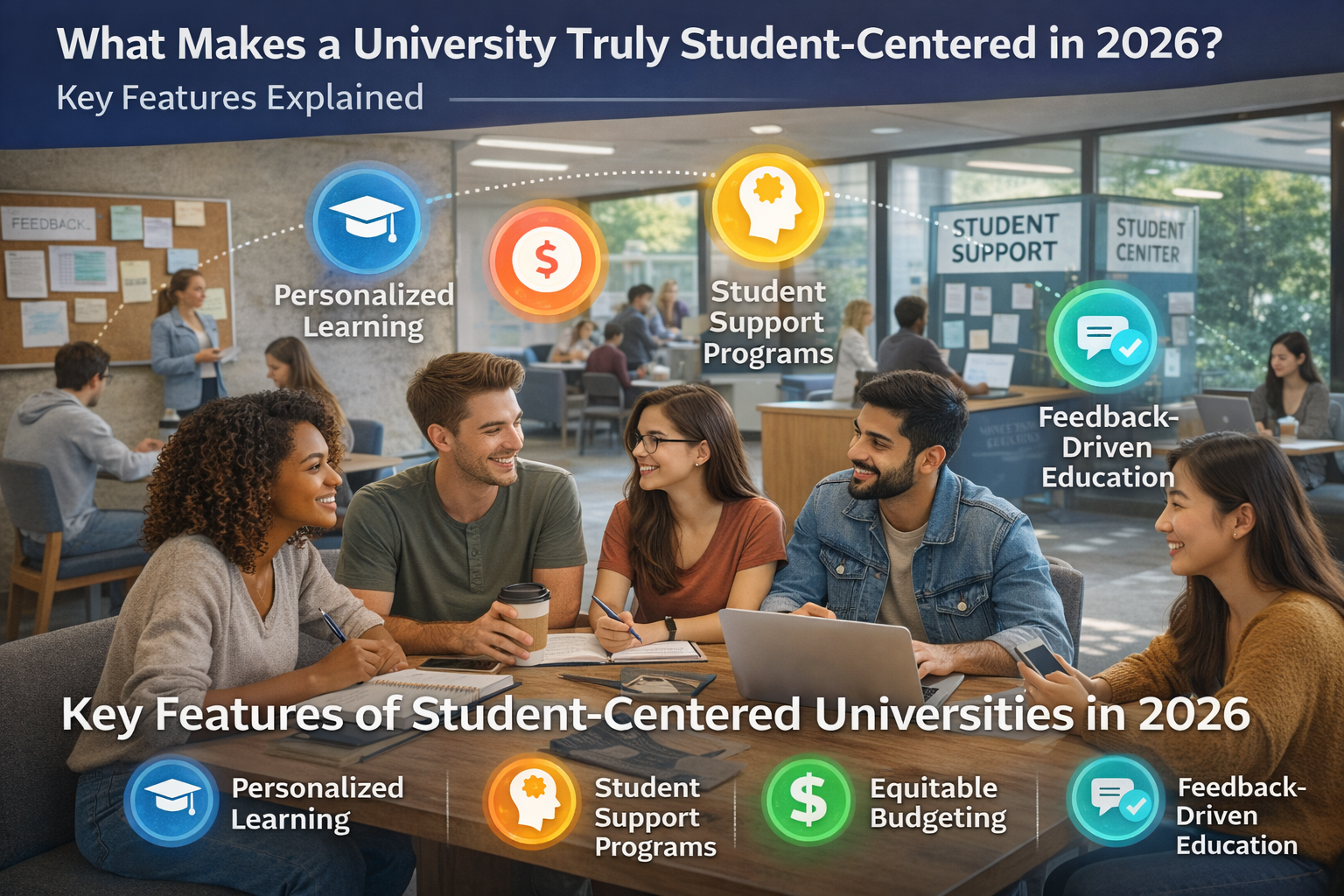
The reality is, not everyone learns the same way, and some students have active difficulties in their lives that make it hard to attend class, complete assignments, or study for exams and tests. A student centric approach, such as many of the practices adopted by Rockhurst University, emphasizes student support and equitable teaching methods, allowing students to get the best from their education.
But what does it mean these days to truly be student-centered?
Why Student-Centered Learning?
It can feel counterintuitive to think of an educational institution as surrendering its authority to the students. However, it really doesn’t take much mental gymnastics to see how student-centered learning should be the default for education.
First, the dynamic of the teacher having authority over the classroom is only beneficial in certain social circles. Small children and adolescents need authority to guide them, to set rules and structure in place that allow them to experiment with life. However, as people get older, they more and more represent their own authority, and suddenly an authoritative figure delivering lessons via verbal hypodermic and strict rigour doesn’t carry the same weight anymore. As people get older, they need to be treated as equals, not just out of respect, but because we retain information better when it is delivered to us on a level playing field.
Second, shifting the focus of an educational facility from the faculty to the students means that the students will have access to the resources and materials they need to learn effectively. Think of it this way: if you have a garden, do you put your feet in soil, drink the water, sunbathe, and expect your plants to grow? Of course not, you need the plants to go in the soil, the roots to be watered, and the sun to shine on their leaves. Only then do the plants flourish. It’s the exact same thing with students. Give them all the tools and resources to learn effectively, and they will achieve wonderful things.
Budgeting Geared Toward Students
All universities have a budget designed to cover the expenses of staff, maintenance, learning materials, etc. There is a deeply flawed social understanding that the “best” universities are those that are harder to get into. This selective process only serves to further the social myth, meanwhile universities that pour their budgets into support programs and instructional materials regularly get better student retention and completion rates.
It doesn’t take a huge leap of logic to see why this is the case, in fact we see it regularly in economics. The bigger the investment, the bigger the return. Education is expensive, when you’re providing infrastructure, materials, field trips, and personnel for the offspring of a country’s population, there is going to be expenditure. But the best results will be from universities that prioritise the student’s experience, ease of access, support programs, and range of tuition materials, over those that simply set a near-impossible entry criteria.
Student Support Programs
Education is important, but unfortunately life doesn’t stop just because someone has discovered their vocation. Sometimes the hardest thing a person goes through can occur just as they need to be at their most grounded and centered. A death in the family, losing a job, a physical injury, psychological trauma, all of these can lead to a delay in either performance or the capability to study.
When this happens, students should be able to rely on their university’s student support programs so that they have access to the help that will allow them to remain within their chosen program, and pass with a good grade.
The minimum support services offered by universities should include counselling, medical assistance, and student advocacy bodies.
Informed by Students
Of course, one of the key aspects of a student-centered education is that the educational faculty has practices in place that allow them to integrate student feedback, criticism, and ideas into the curriculum.
This can include surveys and questionnaires at critical points of the course in order to see what students thought did or did not work. Assessments could be based on student ideas, encouraging creative and autonomous thinking. There are many methods that an educational organization can use to foster a learning environment that is on equitable terms with its student body.
Looking to the Future
As time goes on, it seems more and more people are advocating for the ruin of education. Between an administration that abhors truth in favor of propaganda and generative AI making it easier than ever to create and spread disinformation and misinformation, as well as slowly corroding the cognitive abilities of the world, we need good education now more than ever.
We need educational bodies dedicated to getting people interested in their vocation. We need lesson delivery in a way that allows students to better engage with and retain their course material, and we need a system that encourages students to put in the effort required to learn what they need.
If we invest in our future, we will be rewarded, but if we ignore data, science, and history, then we are doomed to repeat it. However, with student-centric learning, there is absolutely no reason why the generations of the future can’t prosper and make the world a truly great place to be.